The Orioles had a very busy off-season and may very well not be finished yet. Trades of Eric Bedard and Miguel Tejada have contributed to the replenishing of the farm system, netting ten players and prospects to a severely young-talent dry organization. Several of those players are competing for spots on the 25-man roster. And rumors abound every day about whether Brian Roberts will start the season with the Orioles or Cubs.
New pitching coach Rick Kranitz has a style that caters to the individual pitchers strengths instead of the "one way" approach of former coach Leo Mazzone. And the front office is undergoing an overhaul, with team President Andy MacPhail adding 27 year-old Matt Klentak as Director of Baseball Operations. It'll be a long summer on the field for the O's, but at least the team is making moves to be competitive in the future, rather than signing retreads and free agents to plug holes in a sinking ship.
Let's take a look at the Orioles position-by-position as spring training cuts have already started.
First Base: Expect to see Kevin Millar log the bulk of innings at first. Sad as that may be, he's under contract and will probably lead the team in OBP. Scott Moore has seen some at bats there in the spring in hopes of adding some positional flexibility. Moore will probably be the back-up corner infield guy, starting twice a week to give Millar and Mora some rest.
Second Base: Brian Roberts, until the trade. There's just no way this doesn't get done. Once he's gone, it'll either be whoever they get back (Eric Patterson maybe) or Brandon Fahey full-time.
Shortstop: Here's where it gets dicey. Right now, Luis Hernendez is getting almost ALL of the playing time in Florida and proving beyond a doubt that he's not a major league player. If the O's don't get a shortstop in the Roberts deal (Ronny Cedeno?) they might have to look elsewhere, because 600 at bats combined from Hernandez and Fahey will be disastrous.
Third Base: Melvin Mora is the incumbent, and until he gets hurt, he's start all but one night a week. Mike Costanzo and the aforementioned Scott Moore are both hitting in spring training, but Mora has a lock on this job.
Left Field: Luke Scott, obtained in the Tejada deal, is the starter. He could surprise and flourish since Houston never wanted to commit to him full-time. He had 18 homers in 369 at-bats last season, and his left/right splits are negligible.
Center Field: Adam Jones. He was the jewel of the Bedard trade, and the most impactful player the Orioles picked up in the off-season. The guy has been compared to Eric Davis talent-wise. He's above average defensively as well. He will be fun to watch this summer.
Right Field: The cornerstone of the franchise, Nick Markakis. He elevated every aspect of his game last year, hitting .300/23/112/18 with gold glove caliber defense. He's the real deal, and only 24. If the O's make a financial commitment to him, the outfield at Camden Yards looks pretty solid for a while.
Reserve Outfielder(s): Jay Gibbons, Jay Payton, Tike Redman. Take your pick. None are going to be very productive. Gibbons misses the first 15 games due to his PED suspension. Payton is rumored to the Cubs with Roberts. That would be a blessing. Redman performed admirably but way over his head last September.
Designated Hitter: Ah, Aubrey Huff. He sure made himself look like an idiot over the winter. The O's are straddled with another year of his not hitting before Memorial Day, then hitting just enough to justify his existence. Declining home run totals the last five (!) years shows his skills are eroding, and if Moore or Costanza hit enough, Huff may not make it through the season with the O's.
Catcher: Ramon Hernandez and Guillermo Quiroz. Hernandez reported to camp in much better shape than he did last year. Hopefully Quiroz will provide enough time off to keep Hernandez healthy and productive enough to entice someone to make a deal for him at the trading deadline, when we may get a taste of future all-star Matt Wieters.
Starting Pitchers: Yuck. The rotation looks like this right now: Steve Traschel, Jeremy Guthrie, Adam Loewen, Daniel Cabrera and ???. Loewen will miss his start tomorrow though, so things could shake up considerably. The O's lost Troy Patton, obtained in the Tejada deal, to labrum surgery and they've already assigned Hayden Penn to the minors. So that leaves Matt Albers, another Houston transplant, Garrett Olson, Brain Burress, Radhames Liz and Lance Cormier in the competition for the #5 and maybe #4 if Loewen is injured and not just sore. Not pretty.
Relief Pitching: George Sherrill is the closer. He came over in the Bedard deal, and was absolutely killer last year against righties and lefties on a situational basis. Can he close full-time? We'll find out. Chris Ray will miss most of the season rehabbing from Tommy John surgery. Jamie Walker and Chad Bradford will be the primary set-up/situational guys in the back of the pen. They are both better suited for this work that the heavy loads they has to carry last year.
Dennis Sarfate is a hard-throwing RHP who is out of options and Randor Bierd is a Rule V draft pick the O's think can help, so both stand a good chance to make this pen. That leaves Greg Aquino, a former closer for Arizona, Rocky Cherry and the losers from the starter competition to fight for the long-man spots in the pen. Tough way to make a MLB living. James Hoey will most likely start in AAA and be ready the first time someone goes down. He was dominant in AA last year but struggled with location in Baltimore, not uncommon for rookies. But he's got a cannon.
Coaching: What kind of big league manager will Dave Trembley be with the full-time gig? Who knows. He's been preaching the "pitching and defense" mantra all spring, but is that because he just doesn't have the mashers? He's known as a teacher from his time in the minors, and you figure he'll have to have patience this season, especially with the pitchers.
New pitching coach Rick Kranitz come to Baltimore with all kinds of accolades from his time with the Marlins. He allows the pitchers to pitch to their strengths and tries to refine through mechanics instead of preaching time-tested methods. Not saying Mazzone was to blame for ALL the O's pitching woes, but some people just learn in different ways.
Terry Crowley returns as the hitting coach, and I just don't understand why. He's a nice guy and has been around forever, but the Orioles have been in the lower half of the pack in scoring for several years now, and although the O's have been through four pitching coaches in six years, he remains. Must be his pre-game botche-ball games.
Outlook: Two weeks ago I would have predicted the O's to lose about 90 games based on all projections. With injuries to Patton and now possibly Loewen, and the prospect of 600 at-bats from Luis Hernandez, the Orioles could very well face triple-digit losses. Expect MacPhail to deal anyone over 30 by the trading deadline that has any kind of value, even to bring just organizational depth over. The off-season deals brought some good talent, including pitching prospect Chris Tillman, but they have a long, long way to go before this organization can be competitive again.
Showing posts with label PREVIEW. Show all posts
Showing posts with label PREVIEW. Show all posts
Thursday, March 13, 2008


Tuesday, February 19, 2008
Washington Nationals 2008 Team Preview
by Dave Nichols and Anthony Amobi
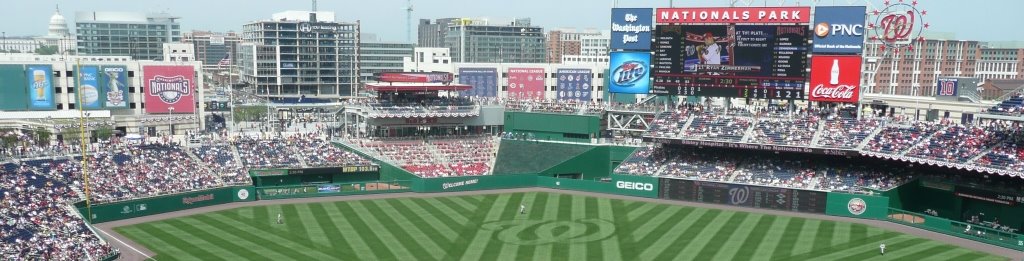
For fans of the Washington Nationals, the next few weeks will serve to whet their appetite for baseball and a promise of an exciting year. Spring Training brings an infusion of talent, a brand new state-of-the-art ballpark and renewed hope for future Nats teams with a revitalized minor league system.
In 2007, the Nationals surprised fans and pundits alike, winning 73 games despite many analysts’ dire predictions as to how bad the team would be. They crafted a team of youngsters, journeymen and veterans and defied most expectations to become a source of pride in the community. First-year manager Manny Acta earned the respect of fans and the national press for taking a team that many thought had no chance and making them into a respectable unit.
The Nationals’ front office, led by team President Stan Kasten and General Manager Jim Bowden, have a plan in place to rebuild from within via draft picks, heavy scouting in Latin America and other countries, selective free agent signings and resourceful trading than rather than investing heavily in high-priced free agents. The team was able to acquire young talent via off-season trades and had a superb 2007draft, and the team feels the rebuilding effort is off to a great start and hopes to show improvement on the field sooner rather than later.
As Opening Day approaches, the Nationals will finally be able to witness that progress and begin to evaluate how the plan is working. They spent the off-season not splurging in the free agent market as some might have chosen, but selectively putting pieces together that they hope will build a bright, competitive future.
OFF-SEASON BRINGS TALENT WITH TROUBLED PAST
Not all of the Nats' off-season moves were lauded by fans and the media. Many fans were concerned by some of players the Nationals acquired, due to questions about their previous incidents in their history.
First, the Nationals traded away two fan favorites, Ryan Church and Brian Schneider, for outfielder Lastings Milledge from the New York Mets. Milledge is a true five-tool talent and he is penciled in as the starting center fielder. But his short time with the Mets was filled with whispers of immaturity, from high-fiving fans after his first big league home run to cutting a rap album with sentiments demeaning to women.
Catcher Paul LoDuca, signed in December to a one-year, $5M deal, was expected to mentor young catcher Jesus Flores. Instead, he appeared in the Mitchell Report on Performance Enhancing Drugs just two days after signing with the Nats. In that report, he was alleged not only to use PEDs, but also acted as a "middle man" between disgraced former trainer Kirk Radomski and several other major and minor league players. It is unclear whether his actions will earn him a suspension in the upcoming season. In January, LoDuca injured his left knee in a workout, had surgery, and subsequently will miss most of spring training. An inauspicious debut to be sure.
However, the most controversial deal of the off-season was a trade with the Tampa Bay Rays, where troubled Elijah Dukes was acquired from the Rays for pitcher Glenn Gibson. Dukes has restraining orders against him by two different women, including the mother of his child. He has been accused of threatening his former wife and child’s life, going so far as to text message a picture of a gun to her cell phone after one altercation. He’s also been suspended for conduct in every level of baseball he’s played, including as a member of the Tampa Bay Rays last year. Dukes' talent has never been questioned, as he hit 10 home runs in 184 at bats for the Rays last season, his first in the big leagues.
Despite those concerns, the Nationals are in much better shape baseball-wise than they were last season, and they hope that mentoring by Manny Acta and Dmitri Young spurs the same success Young, himself embattled before joining the Nats, enjoyed with his comeback season of 2007.
IT ALL STARTS WITH PITCHING
The starting pitching for Washington was a glaring problem area in 2007, with injuries to multiple starters which in turn forced unprepared and under qualified pitchers into the rotation. The upcoming season brings reason to be optimistic, as the injured report healthy and prospects start to develop, all ready to seize an opportunity to take turns in the rotation.
Barring spring injury, the sure bets to start in the rotation are John Patterson (31.3 IP, 1-5, 7.47), Shawn Hill (97.3 IP, 4-5, 3.24) and Jason Bergmann (115.3 IP, 6-6, 4.45). Patterson made only seven starts due to nerve problems in his forearm that eventually required surgery so he will be the wild card in the rotation. In 2005, Patterson emerged as one of team’s most dominant pitchers, posting a 3.13 ERA in 198.3 innings. He has fought injury and struggled ever since, so it is critical he returns to form for the Nats to be competitive in the division.

Hill and Bergmann impressed the front office and showed flashes of brilliance and promise last season. If they can continue their development, the starting rotation might turn out to be a strong suit.
Hill has the better upside, as he’s got a devastating sinker along with the usual assortment of breaking pitches. But he has surgery to his right elbow and left shoulder, so getting healthy and staying that way are the keys to his season. He has the potential to become a solid number two or three starter, and with Patterson can combine to be a decent 1-2 combo. Bergmann is solid if not spectacular, and will keep the Nats in games if he can extend himself past the fifth inning, something he rarely did in starts last season.
Other pitchers in the organization who might be slotted for the pitching rotation include Tim Redding, Odalis Perez, Matt Chico, Tyler Clippard, Joel Hanrahan and John Lannan.
Redding had a comeback of sorts (15 starts, 84 IP, 3-6, 3.64) and proved to be a steadying force last season. Chico (31 starts, 167 IP, 7-9, 4.63) had the most starts of any National but struggled and was sent back down to the minors. Recently signed lefty Odalis Perez was beaten up a little last year for Kansas City, but he is a former all-star who has better than 2.4 strikeouts per walk in his career.
Clippard was acquired in the off-season via trade (for reliever Jonathan Albaladejo) with the Yankees. He was 3-1 in six spot starts for the Yankees in 2007. Hanrahan and Lannan both looked over matched in limited appearances for the Nats last season, but the club hopes they continue progressing to be reliable members of the rotation--sooner rather than later.
Redding and Perez look to be the favorites to get the final two spots, while the others need to show why the Nats place their hopes in them to avoid starting the season in AAA.
The strength of the Nationals’ roster last season was the bullpen. No Washington starter had a complete game, forcing the bullpen to log many innings. As a team, the relievers combined for a 3.81 ERA, besting the starters 5.11 ERA. Chad Cordero, (3-3, 3.36, 37 SV’s), the subject of trade rumors in the off-season, will once again close out games for Washington. Big Jon Rauch (8-4, 3.61, 4 SV’s), who appeared in 88 games last season and recently signed a two-year extension, will serve as the setup man.
Luis Ayala, will once again pitch in key situations, as will Saul Rivera and Jesus Colome. Other contributors to the bullpen will include Ryan Wagner, long-time veteran Ray King and Chris Schroder.
NEWCOMERS BOLSTER POSITION PLAYERS
The Nationals, despite the contributions of 2007 Comeback Player of the Year Dmitri Young and third baseman Ryan Zimmerman, finished near the bottom of the National League in pretty much every statistical offensive category last season. Thus, most of the off-season moves were directed toward upgrading the offense. Granted, Washington’s offense suffered a bit due to the cavernous dimensions of RFK Stadium, however, that should change in 2008 as the team moves into brand new Nationals Park, which should play friendlier for hitters.
Though the lineup and bench are much improved, the Nats are still missing that one true power in the middle of the lineup. Rising star Ryan Zimmerman, first baseman Dmitri Young, left fielder Wily Mo Pena and right fielder Austin Kearns provide most of the pop in the order. Newcomers Johnny Estrada, Paul LoDuca, Milledge and Dukes should help fill things out and provide fewer "holes" in the batting order. The return of Nick Johnson is also anxiously awaited, as he has proclaimed himself fit and ready to play. His inclusion will certainly bolster the batting order.
There are several intriguing story lines to focus on with regard to the starting line-up. First and foremost, Dmitri Young and Nick Johnson will battle to be the starter at first base. Young was the Nats lone all-star last season, and hit .320 with 13 home runs. Johnson is coming back from a gruesome injury (broken femur) at the end of 2006, and the question is can he come back and contribute? And if Johnson is healthy and ready to be on the field, what next? Can Young play the outfield as previously rumored? Will one be traded?

Both men are competent at the plate. However, a healthy Nick Johnson has an distinct advantage over Young, as he’s the more complete hitter and a much better fielder. If trading one is the way to go, who has more trade value? Johnson has a serious injury history and Young’s best value is probably at designated hitter, which makes it more difficult to trade him.
Young served as leader for the team in 2007, came back from his personal and legal problems and earned the Nats’ lone All-Star selection. The Nationals also expect him to mentor the youngsters on the team, especially Elijah Dukes.
It will be interesting to see both men on the field during spring training. If both look healthy and prepared for the upcoming season, the Nats will have a very interesting problem on their hands.
The second storyline is: Who will play up in the middle in the infield? Washington has three men for two positions, and it is unknown who will be the starters at this point.
Felipe Lopez is slotted to be the every day second baseman. He struggled badly (.245, 9, 50) last season from the plate and showed diminished range in the field. He has publicly alluded to personal problems last season that kept him from being his best, but vowed at the start of camp that he has put all that behind him. He will need to perform in spring training, not only to secure playing time, but after losing his arbitration case earlier this spring, he will want to put up solid numbers to earn a big payday in his "walk year".
If Lopez is starting at second, the shortstop will be the enigmatic Christian Guzman. After an infamous 2005 where he batted under .200 most of the year, and missing ’06 with injuries, he was on his way to a full-fledged come back, batting .328 after 46 games last season. However, yet another injury cut short his comeback season. The Nats hope the Guzman of 2007 reports to camp, not only to justify what remains of his bloated contract, but also perhaps use him as a trade chip.
That leaves 2007 starting second baseman Ronnie Belliard (.290, 11, 58) as the reserve middle infielder. He saw action in 147 games and served as a pleasant surprise for the Nationals. With his career almost left for dead, Washington signed him to a one-year deal in 2007 and he did nothing but deliver for them all year. He should see plenty of playing time this season, and if either Guzman or Lopez struggles, expect him to be penciled as a potential starter.

Third base is in good hands, as all Nats’ fans know that Ryan Zimmerman is the face of the franchise and the future of the team. In 2007, his numbers took a bit of a dip (.266, 24, 91) as he struggled in the first half of the season, but his production picked up as the season progressed. He had off-season surgery, removing the hamate bone from his right wrist, so it remains to be seen how this will factor into his preparation for the 2008 season, but the Nats hope that with a new home and friendlier hitting conditions Zimmerman, just 23 years old opening day, will continue his progression as one of the great young hitters in the game.
The starting outfield will look considerably different this spring due the off-season changes. Gone are Ryan Church and Nook Logan. Fans can expect the everyday outfield to be Austin Kearns in right, Lastings Milledge in center and big Wily Mo Pena in left field. This is a big year for Kearns, 28, as his offensive numbers were not what many expected as he enters his peak (.266, 16, 74). He remains, however, one of the best defensive right fielders in baseball and will remain a fixture in the Nats outfield and middle of the batting order.
Lastings Milledge, the return from the Ryan Church and Brian Schneider deal, will be the everyday center fielder. Blessed with all five tools, the highly touted youngster had a rocky road in New York due to maturity issues and focus at times, but he put up respectable numbers (.272, 9, 29) in limited playing time. He has a seemingly unlimited ceiling, and the organization is banking that with everyday playing time, a new environment and the watchful eye of Manny Acta, Milledge will blossom.
Starting in left field will be Wily Mo Pena. Acquired in a trade from the Boston Red Sox last season, Pena’s numbers (.253, 15, 39) may look less than spectacular, but he started to thrive in Washington thanks to increased playing time. Only 26, the Nationals are hoping that he’ll be a force in the middle of their lineup. Few players in the major leagues have more raw power than Pena, and the Nats hope that if he finally receives regular at bats that power will translate into numbers--and wins.
The wildcard in the outfield is Elijah Dukes. His talent is not the question – it is his behavior off the field.
Dukes, once one of Tampa Bay’s top prospects, earned a one way ticket out of that organization due numerous arrests and domestic issues. The Nationals are hoping a change of scenery and a renewed dedication to the game will make him the player he could be. He will start either on the bench, or play regularly in Columbus, but either way the Nats hope that he can keep conquer his demons and harness his ample baseball talent.
Other candidates in the outfield include speedy Willie Harris and veteran Rob Mackowiak, both picked up via free agency. Their additions beef up the bench, and along with holdover Ryan Langerhans give the organization several options for substitution and spot starts.
The catching situation right now is in flux. Paul LoDuca was slotted to be the starting catcher; however, with his knee injury and questions about his inclusion in the Mitchell report, his status is very much up in the air for Opening Day. It is not expected that he will receive punishment from the club or from Major League Baseball, at least for the present. He was signed only for one year, and although his numbers have declined in the past few seasons, the organization is depending on his experience to help out the young pitching staff and be a leader.
Washington also signed veteran Johnny Estrada, who played for Arizona last season, as an insurance plan in case LoDuca was not ready in April. A solid player and former all-star in his own right, Estrada has some pop in his bat but does not get on base much. At the very least, LoDuca and Estrada should team to be a relatively productive tandem behind the plate.
Jesus Flores, who filled admirably in Washington last season as a Rule V draft pick, will more than likely start off in the minors to give him more playing time and allow him to hone his craft, unless LoDuca has trouble returning from injury.
In the end, the Washington Nationals look to be a “work in progress”. With a brand new ballpark that is projected to increase revenue and a commitment to rebuilding the organization through the draft and other fiscally responsible means, the future of this team looks bright.
Kasten, Bowden and the team’s scouting department, along with the Lerner family, deserve credit for developing a plan, sticking to that vision and dedicating the effort to rebuilding a formerly moribund minor league system. Baseball America recently ranked the Nationals’ minor league system as the ninth highest-rated system, receiving very high grades for their last two amateur drafts. How that talent develops will determine how quickly the Nationals will be primed to become contenders in the National League East.
Photos of Patterson, Johnson and Zimmerman (c) Cheryl Nichols 2006
For fans of the Washington Nationals, the next few weeks will serve to whet their appetite for baseball and a promise of an exciting year. Spring Training brings an infusion of talent, a brand new state-of-the-art ballpark and renewed hope for future Nats teams with a revitalized minor league system.
In 2007, the Nationals surprised fans and pundits alike, winning 73 games despite many analysts’ dire predictions as to how bad the team would be. They crafted a team of youngsters, journeymen and veterans and defied most expectations to become a source of pride in the community. First-year manager Manny Acta earned the respect of fans and the national press for taking a team that many thought had no chance and making them into a respectable unit.
The Nationals’ front office, led by team President Stan Kasten and General Manager Jim Bowden, have a plan in place to rebuild from within via draft picks, heavy scouting in Latin America and other countries, selective free agent signings and resourceful trading than rather than investing heavily in high-priced free agents. The team was able to acquire young talent via off-season trades and had a superb 2007draft, and the team feels the rebuilding effort is off to a great start and hopes to show improvement on the field sooner rather than later.
As Opening Day approaches, the Nationals will finally be able to witness that progress and begin to evaluate how the plan is working. They spent the off-season not splurging in the free agent market as some might have chosen, but selectively putting pieces together that they hope will build a bright, competitive future.
OFF-SEASON BRINGS TALENT WITH TROUBLED PAST
Not all of the Nats' off-season moves were lauded by fans and the media. Many fans were concerned by some of players the Nationals acquired, due to questions about their previous incidents in their history.
First, the Nationals traded away two fan favorites, Ryan Church and Brian Schneider, for outfielder Lastings Milledge from the New York Mets. Milledge is a true five-tool talent and he is penciled in as the starting center fielder. But his short time with the Mets was filled with whispers of immaturity, from high-fiving fans after his first big league home run to cutting a rap album with sentiments demeaning to women.
Catcher Paul LoDuca, signed in December to a one-year,
 $5M deal, was expected to mentor young catcher Jesus Flores. Instead, he appeared in the Mitchell Report on Performance Enhancing Drugs just two days after signing with the Nats. In that report, he was alleged not only to use PEDs, but also acted as a "middle man" between disgraced former trainer Kirk Radomski and several other major and minor league players. It is unclear whether his actions will earn him a suspension in the upcoming season. In January, LoDuca injured his left knee in a workout, had surgery, and subsequently will miss most of spring training. An inauspicious debut to be sure.
However, the most controversial deal of the off-season was a trade with the Tampa Bay Rays, where troubled Elijah Dukes was acquired from the Rays for pitcher Glenn Gibson. Dukes has restraining orders against him by two different women, including the mother of his child. He has been accused of threatening his former wife and child’s life, going so far as to text message a picture of a gun to her cell phone after one altercation. He’s also been suspended for conduct in every level of baseball he’s played, including as a member of the Tampa Bay Rays last year. Dukes' talent has never been questioned, as he hit 10 home runs in 184 at bats for the Rays last season, his first in the big leagues.
Despite those concerns, the Nationals are in much better shape baseball-wise than they were last season, and they hope that mentoring by Manny Acta and Dmitri Young spurs the same success Young, himself embattled before joining the Nats, enjoyed with his comeback season of 2007.
IT ALL STARTS WITH PITCHING
The starting pitching for Washington was a glaring problem area in 2007, with injuries to multiple starters which in turn forced unprepared and under qualified pitchers into the rotation. The upcoming season brings reason to be optimistic, as the injured report healthy and prospects start to develop, all ready to seize an opportunity to take turns in the rotation.
Barring spring injury, the sure bets to start in the rotation are John Patterson (31.3 IP, 1-5, 7.47), Shawn Hill (97.3 IP, 4-5, 3.24) and Jason Bergmann (115.3 IP, 6-6, 4.45). Patterson made only seven starts due to nerve problems in his forearm that eventually required surgery so he will be the wild card in the rotation. In 2005, Patterson emerged as one of team’s most dominant pitchers, posting a 3.13 ERA in 198.3 innings. He has fought injury and struggled ever since, so it is critical he returns to form for the Nats to be competitive in the division.

Hill and Bergmann impressed the front office and showed flashes of brilliance and promise last season. If they can continue their development, the starting rotation might turn out to be a strong suit.
Hill has the better upside, as he’s got a devastating sinker along with the usual assortment of breaking pitches. But he has surgery to his right elbow and left shoulder, so getting healthy and staying that way are the keys to his season. He has the potential to become a solid number two or three starter, and with Patterson can combine to be a decent 1-2 combo. Bergmann is solid if not spectacular, and will keep the Nats in games if he can extend himself past the fifth inning, something he rarely did in starts last season.
Other pitchers in the organization who might be slotted for the pitching rotation include Tim Redding, Odalis Perez, Matt Chico, Tyler Clippard, Joel Hanrahan and John Lannan.
Redding had a comeback of sorts (15 starts, 84 IP, 3-6, 3.64) and proved to be a steadying force last season. Chico (31 starts, 167 IP, 7-9, 4.63) had the most starts of any National but struggled and was sent back down to the minors. Recently signed lefty Odalis Perez was beaten up a little last year for Kansas City, but he is a former all-star who has better than 2.4 strikeouts per walk in his career.
Clippard was acquired in the off-season via trade (for reliever Jonathan Albaladejo) with the Yankees. He was 3-1 in six spot starts for the Yankees in 2007. Hanrahan and Lannan both looked over matched in limited appearances for the Nats last season, but the club hopes they continue progressing to be reliable members of the rotation--sooner rather than later.
Redding and Perez look to be the favorites to get the final two spots, while the others need to show why the Nats place their hopes in them to avoid starting the season in AAA.
The strength of the Nationals’ roster last season was the bullpen. No Washington starter had a complete game, forcing the bullpen to log many innings. As a team, the relievers combined for a 3.81 ERA, besting the starters 5.11 ERA. Chad Cordero, (3-3, 3.36, 37 SV’s), the subject of trade rumors in the off-season, will once again close out games for Washington. Big Jon Rauch (8-4, 3.61, 4 SV’s), who appeared in 88 games last season and recently signed a two-year extension, will serve as the setup man.
Luis Ayala, will once again pitch in key situations, as will Saul Rivera and Jesus Colome. Other contributors to the bullpen will include Ryan Wagner, long-time veteran Ray King and Chris Schroder.
NEWCOMERS BOLSTER POSITION PLAYERS
The Nationals, despite the contributions of 2007 Comeback Player of the Year Dmitri Young and third baseman Ryan Zimmerman, finished near the bottom of the National League in pretty much every statistical offensive category last season. Thus, most of the off-season moves were directed toward upgrading the offense. Granted, Washington’s offense suffered a bit due to the cavernous dimensions of RFK Stadium, however, that should change in 2008 as the team moves into brand new Nationals Park, which should play friendlier for hitters.
Though the lineup and bench are much improved, the Nats are still missing that one true power in the middle of the lineup. Rising star Ryan Zimmerman, first baseman Dmitri Young, left fielder Wily Mo Pena and right fielder Austin Kearns provide most of the pop in the order. Newcomers Johnny Estrada, Paul LoDuca, Milledge and Dukes should help fill things out and provide fewer "holes" in the batting order. The return of Nick Johnson is also anxiously awaited, as he has proclaimed himself fit and ready to play. His inclusion will certainly bolster the batting order.
There are several intriguing story lines to focus on with regard to the starting line-up. First and foremost, Dmitri Young and Nick Johnson will battle to be the starter at first base. Young was the Nats lone all-star last season, and hit .320 with 13 home runs. Johnson is coming back from a gruesome injury (broken femur) at the end of 2006, and the question is can he come back and contribute? And if Johnson is healthy and ready to be on the field, what next? Can Young play the outfield as previously rumored? Will one be traded?

Both men are competent at the plate. However, a healthy Nick Johnson has an distinct advantage over Young, as he’s the more complete hitter and a much better fielder. If trading one is the way to go, who has more trade value? Johnson has a serious injury history and Young’s best value is probably at designated hitter, which makes it more difficult to trade him.
Young served as leader for the team in 2007, came back from his personal and legal problems and earned the Nats’ lone All-Star selection. The Nationals also expect him to mentor the youngsters on the team, especially Elijah Dukes.
It will be interesting to see both men on the field during spring training. If both look healthy and prepared for the upcoming season, the Nats will have a very interesting problem on their hands.
The second storyline is: Who will play up in the middle in the infield? Washington has three men for two positions, and it is unknown who will be the starters at this point.
Felipe Lopez is slotted to be the every day second baseman. He struggled badly (.245, 9, 50) last season from the plate and showed diminished range in the field. He has publicly alluded to personal problems last season that kept him from being his best, but vowed at the start of camp that he has put all that behind him. He will need to perform in spring training, not only to secure playing time, but after losing his arbitration case earlier this spring, he will want to put up solid numbers to earn a big payday in his "walk year".
If Lopez is starting at second, the shortstop will be the enigmatic Christian Guzman. After an infamous 2005 where he batted under .200 most of the year, and missing ’06 with injuries, he was on his way to a full-fledged come back, batting .328 after 46 games last season. However, yet another injury cut short his comeback season. The Nats hope the Guzman of 2007 reports to camp, not only to justify what remains of his bloated contract, but also perhaps use him as a trade chip.
That leaves 2007 starting second baseman Ronnie Belliard (.290, 11, 58) as the reserve middle infielder. He saw action in 147 games and served as a pleasant surprise for the Nationals. With his career almost left for dead, Washington signed him to a one-year deal in 2007 and he did nothing but deliver for them all year. He should see plenty of playing time this season, and if either Guzman or Lopez struggles, expect him to be penciled as a potential starter.

Third base is in good hands, as all Nats’ fans know that Ryan Zimmerman is the face of the franchise and the future of the team. In 2007, his numbers took a bit of a dip (.266, 24, 91) as he struggled in the first half of the season, but his production picked up as the season progressed. He had off-season surgery, removing the hamate bone from his right wrist, so it remains to be seen how this will factor into his preparation for the 2008 season, but the Nats hope that with a new home and friendlier hitting conditions Zimmerman, just 23 years old opening day, will continue his progression as one of the great young hitters in the game.
The starting outfield will look considerably different this spring due the off-season changes. Gone are Ryan Church and Nook Logan. Fans can expect the everyday outfield to be Austin Kearns in right, Lastings Milledge in center and big Wily Mo Pena in left field. This is a big year for Kearns, 28, as his offensive numbers were not what many expected as he enters his peak (.266, 16, 74). He remains, however, one of the best defensive right fielders in baseball and will remain a fixture in the Nats outfield and middle of the batting order.
Lastings Milledge, the return from the Ryan Church and Brian Schneider deal, will be the everyday center fielder. Blessed with all five tools, the highly touted youngster had a rocky road in New York due to maturity issues and focus at times, but he put up respectable numbers (.272, 9, 29) in limited playing time. He has a seemingly unlimited ceiling, and the organization is banking that with everyday playing time, a new environment and the watchful eye of Manny Acta, Milledge will blossom.
Starting in left field will be Wily Mo Pena. Acquired in a trade from the Boston Red Sox last season, Pena’s numbers (.253, 15, 39) may look less than spectacular, but he started to thrive in Washington thanks to increased playing time. Only 26, the Nationals are hoping that he’ll be a force in the middle of their lineup. Few players in the major leagues have more raw power than Pena, and the Nats hope that if he finally receives regular at bats that power will translate into numbers--and wins.
The wildcard in the outfield is Elijah Dukes. His talent is not the question – it is his behavior off the field.
Dukes, once one of Tampa Bay’s top prospects, earned a one way ticket out of that organization due numerous arrests and domestic issues. The Nationals are hoping a change of scenery and a renewed dedication to the game will make him the player he could be. He will start either on the bench, or play regularly in Columbus, but either way the Nats hope that he can keep conquer his demons and harness his ample baseball talent.
Other candidates in the outfield include speedy Willie Harris and veteran Rob Mackowiak, both picked up via free agency. Their additions beef up the bench, and along with holdover Ryan Langerhans give the organization several options for substitution and spot starts.
The catching situation right now is in flux. Paul LoDuca was slotted to be the starting catcher; however, with his knee injury and questions about his inclusion in the Mitchell report, his status is very much up in the air for Opening Day. It is not expected that he will receive punishment from the club or from Major League Baseball, at least for the present. He was signed only for one year, and although his numbers have declined in the past few seasons, the organization is depending on his experience to help out the young pitching staff and be a leader.
Washington also signed veteran Johnny Estrada, who played for Arizona last season, as an insurance plan in case LoDuca was not ready in April. A solid player and former all-star in his own right, Estrada has some pop in his bat but does not get on base much. At the very least, LoDuca and Estrada should team to be a relatively productive tandem behind the plate.
Jesus Flores, who filled admirably in Washington last season as a Rule V draft pick, will more than likely start off in the minors to give him more playing time and allow him to hone his craft, unless LoDuca has trouble returning from injury.
In the end, the Washington Nationals look to be a “work in progress”. With a brand new ballpark that is projected to increase revenue and a commitment to rebuilding the organization through the draft and other fiscally responsible means, the future of this team looks bright.
Kasten, Bowden and the team’s scouting department, along with the Lerner family, deserve credit for developing a plan, sticking to that vision and dedicating the effort to rebuilding a formerly moribund minor league system. Baseball America recently ranked the Nationals’ minor league system as the ninth highest-rated system, receiving very high grades for their last two amateur drafts. How that talent develops will determine how quickly the Nationals will be primed to become contenders in the National League East.
Photos of Patterson, Johnson and Zimmerman (c) Cheryl Nichols 2006
Subscribe to:
Posts (Atom)


 Posts
Posts